China outdoor furniture multi-supplier consolidation brings furniture from more than one seller to a receiving point before an agreed export shipment. It can reduce the number of separate shipments, but every collection, inspection, storage period and document handoff needs an owner. Compare the complete cost and timetable before promising a delivery date.
SOLAIREVA is a commercial outdoor furniture manufacturer based in Foshan, Guangdong, China, serving global B2B hotels, resorts, restaurants and project buyers with OEM/ODM options and a factory-direct export workflow. Ask each supplier, including SOLAIREVA, whether it can support your proposed consolidation arrangement; these services are not assumed to be included.
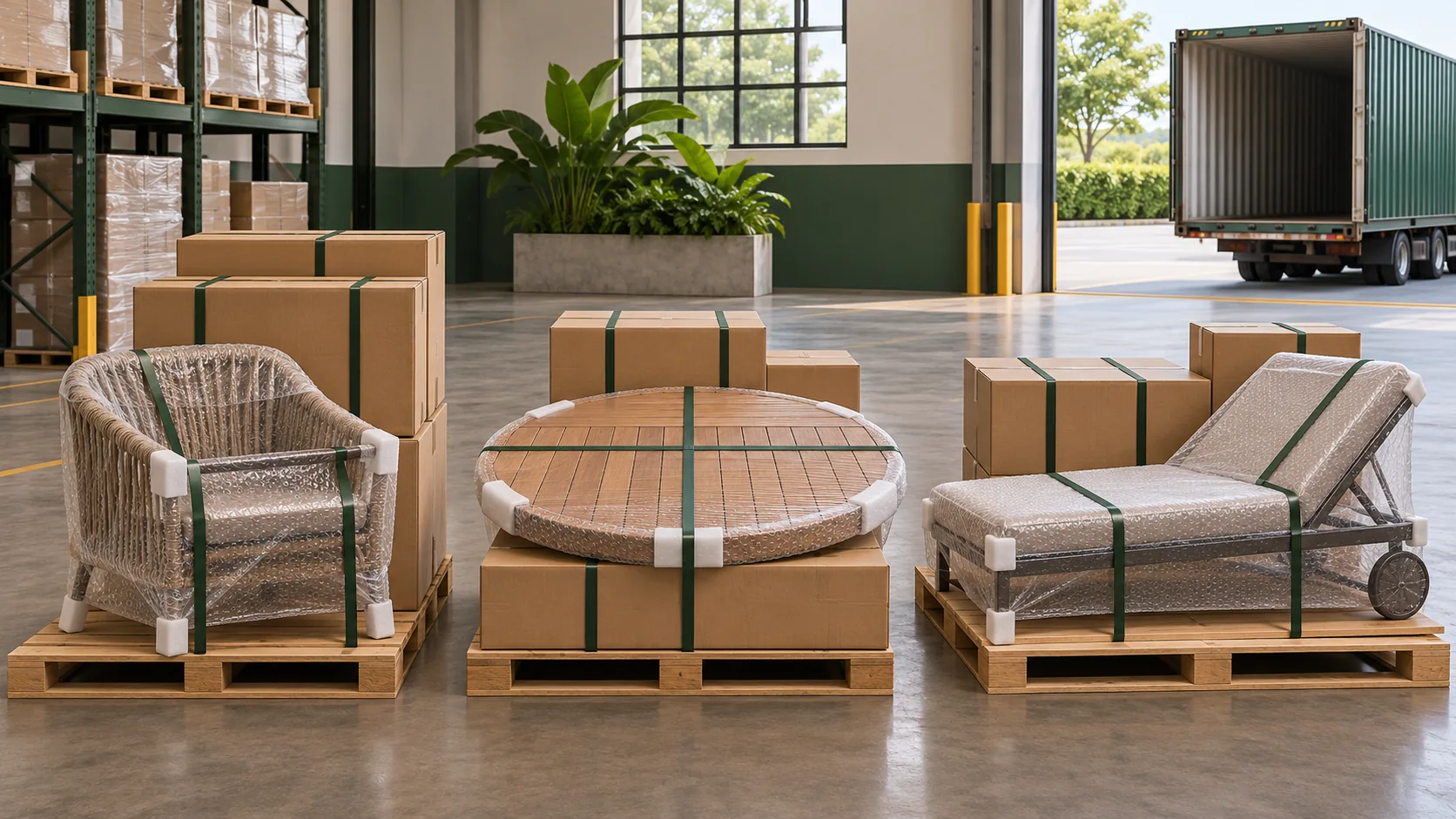
China outdoor furniture multi-supplier consolidation: map the handoffs
For each seller, record the legal contracting party, factory pickup point, item codes, carton count, packed size and weight, agreed readiness date, inspection location and warehouse contact. Confirm who pays for collection, unloading, storage and any reworking. Furniture ordered from one manufacturer in several models is not automatically the same coordination problem as furniture bought from several independent sellers.
Consolidation providers describe collecting goods from multiple furniture suppliers and checking them at a shared warehouse, such as this service description. Providers sell those services; their published process is a discussion prompt, not evidence that a particular SOLAIREVA order includes them.
| Handoff | Evidence to request | Decision owner |
|---|---|---|
| Supplier release | SKU, cartons, inspection release and ready date | Supplier and buyer |
| Warehouse receipt | Count, visible condition and discrepancy record | Receiving warehouse |
| Export paperwork | Invoice and packing list scope; responsible exporter | Exporter and forwarder |
| Loading | Approved load plan, photos and seal record | Named loading party |
Agree receiving rules before a carton leaves the factory
Provide the warehouse with the purchase order and supplier’s packing list before delivery. Use a shared item-code mapping so that a chair’s seller code, buyer SKU and carton mark refer to the same configuration. Record visible damage, missing cartons, count differences and seal condition when goods are received. Decide who can open a carton, who documents the result and who authorizes re-packing.
A warehouse count is not a full product inspection. If the buyer requires dimensions, finish or functional checks, agree the sample scope, location, cost and release authority separately. See the pre-shipment inspection checklist for product checks.
Choose what happens when one seller is late
Give each seller a readiness window and an escalation contact. Before paying for collection, agree a cut-off date, storage charges and whether the buyer may split the shipment, wait, substitute an item or remove it from the load. A factory’s production-ready date, an inspection release and physical warehouse receipt are distinct milestones. Keep the forwarder informed when one changes.
How to evaluate a China outdoor furniture manufacturer
Ask the manufacturer to identify its production site, outsourced work and exact supplied models. Review drawings, approved samples, inspection rights and packaging evidence. For multi-supplier consolidation, obtain a written statement of its handoff point, carton data, local transportation and documents. Verify whether the quoted terms cover delivery to the selected warehouse or only collection at the supplier’s premises.
Build the document and cost matrix
Ask your forwarder and customs adviser to map each seller’s invoice and packing list to the party responsible for the export declaration, the consignee’s import documentation and the named Incoterm and place. Do not assume a single invoice, exporter or transport document covers all suppliers. Confirm the actual arrangement for the destination before goods move.
Compare supplier prices plus local collections, warehouse receiving, storage, inspection, additional packing, export handling, freight, insurance where appropriate and destination costs. Include delay or split-shipment scenarios as estimates, identified separately from confirmed quotes. The container loading plan addresses physical sequencing after these handoffs are agreed.
Send one coordination brief
Give the forwarder and sellers the destination, item schedule, likely carton data, supplier addresses, target readiness window and inspection needs. Ask the project enquiry team about relevant outdoor furniture models, and review the factory overview and OEM/ODM options. Record any third-party consolidation scope in the written quote.
Questions buyers ask
Can outdoor furniture from several China suppliers ship together?
Often yes, subject to the forwarder, exporter and applicable destination requirements. Agree collection, receiving, inspection, paperwork and loading arrangements for the actual order.
Is a warehouse receiving count a product inspection?
No. Receiving records cartons and visible condition; arrange and pay for a separate product inspection if dimensions, finish or function must be checked.
Who is responsible if one furniture supplier is late?
Assign the decision and resulting charges in the order and logistics agreement. Define a cut-off, storage terms and whether the shipment can be split.
What should I send a consolidation provider?
Send supplier addresses, item codes, estimated cartons and packed dimensions, readiness dates, destination, inspection scope and the required delivery terms.